Winter 2026 update
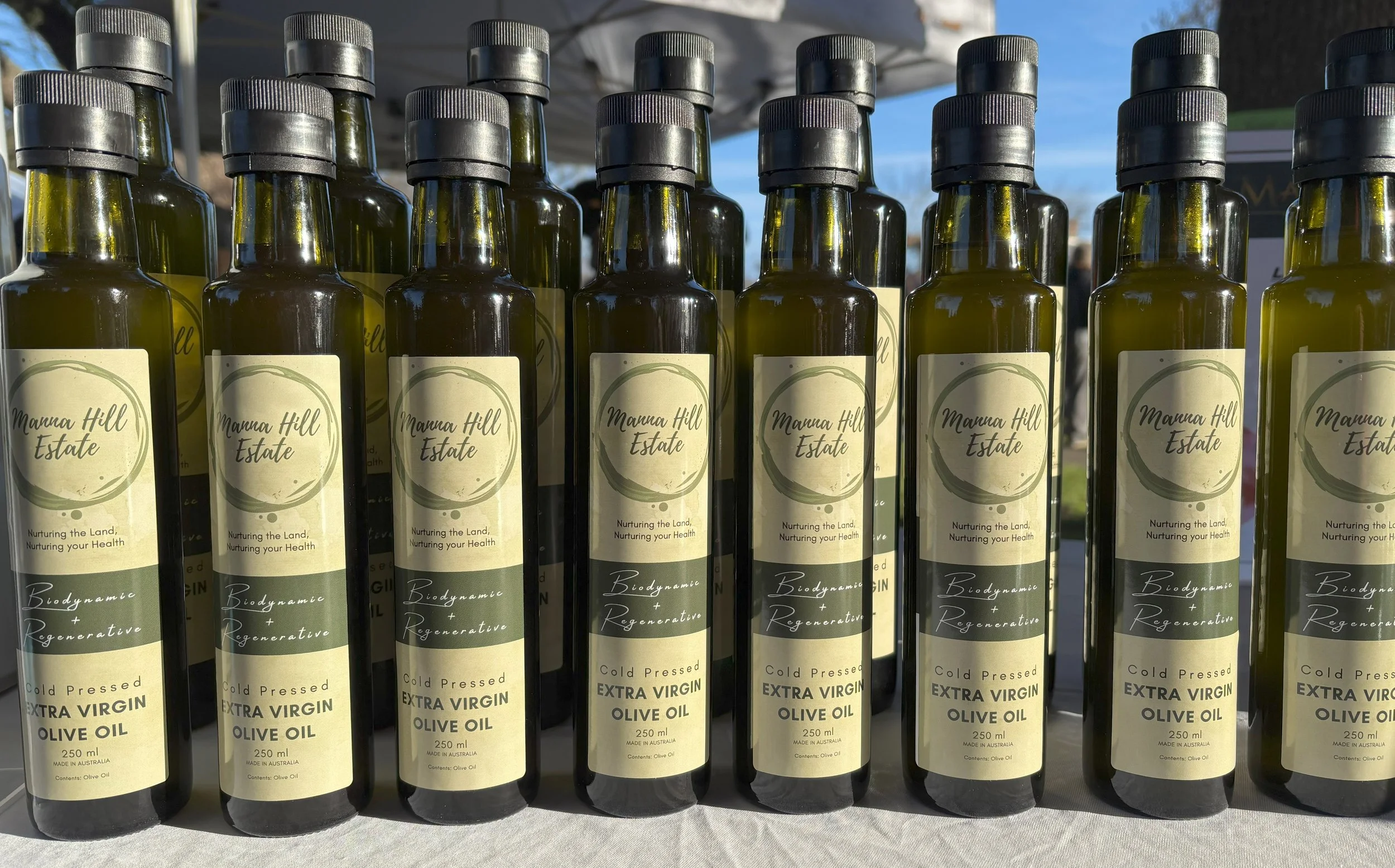
2026 Harvest now available….
Great news – we now have our amazing certified biodynamic-organic, certified regenerative, unfiltered, cold-pressed, extra virgin olive oil back in stock! After nearly three months of being out of stock, we are really excited that our 2026 olive oil is now available.
This olive oil has come straight off the press, so it will still be a little cloudy. Olive oil this fresh and unfiltered is cloudy due to fine particles of the olive suspended in the oil. These are high in antioxidants, contribute to the bright and lively flavour of freshly pressed olive oil, and are often much sought after as a result. However, for those who leave their bottle or cask standing for some time, can expect to find some sediment at the bottom, though I suspect it will be consumed long before that happens!
An interesting season……
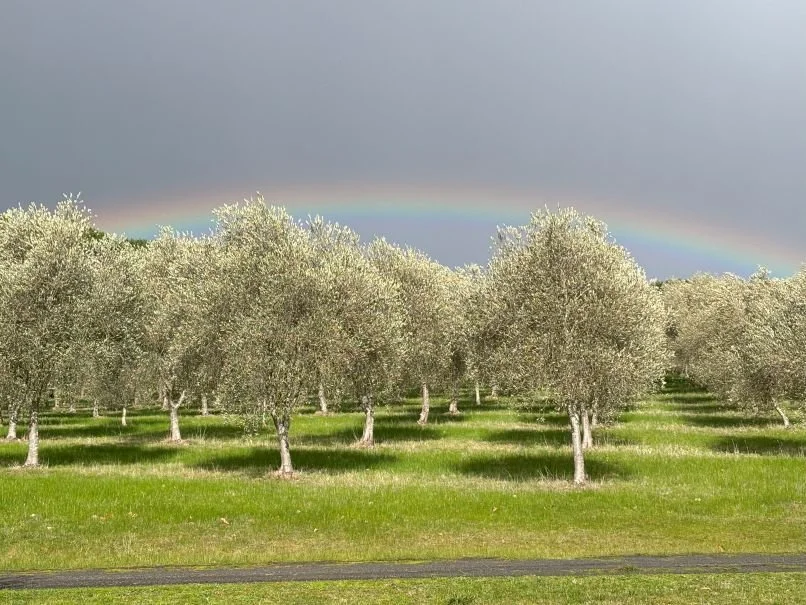
It was certainly a topsy-turvy season. It started off with a dry spring, but we then received some decent rain just before flowering, which is when we really need it. Conditions during flowering were OK but not optimal, and then the subsequent summer and autumn were very dry. The trees handled the stress pretty well, so we ended up with an average yield but much lower oil content than usual. We suspect this was due to the dry conditions into late Autumn, as overseas research has indicated that a lack of moisture during the critical oil-building phase in the fruit slows this process. Being a dry range grove, we are totally dependent on natural rainfall, so there wasn’t much we could do about that. The upside is that the oil has great flavour and a wonderful fresh, vibrant colour.
Certified organic, biodynamic and regenerative….
Did you know that Manna Hill Estate was the first olive grove in the world to be certified regenerative by global certifier AGW? And it is still, as far as we are aware, the only grove across the globe that is certified biodynamic and regenerative – so pretty unique from lots of perspectives.
So why certification? The reality is that we would use the same methods and approach to our farming practices whether we were certified or not, as we believe it is the right approach to producing food free from harmful pesticides and chemicals and also restoring the landscape; however, certification gives you, the consumer, some protection by: -
· ensuring that all stages of production, processing and marketing are subject to inspection and meet predetermined requirements
· helping to prevent deception and fraud in the marketplace
New certifier
You will no doubt notice that we have changed our certifier (organic & biodynamic) to Southern Cross Certified. Our previous certifier, NASAA, went into administration just before the end of the 2025 financial year, leaving us (and many others) very little time to find another certifier. Southern Cross Certified were outstanding in promptly changing our certification and has been very accessible and helpful during the transition, turning what could have been a bit of a tsunami into something less than a ripple!
Olive oil in the news
The Australian Olive Association (AOA) olive oil quality monitoring program recently revealed some interesting results: some imported olive oils (including organic imports) failed to meet extra-virgin quality standards (despite being sold as such). Some of the oils were clearly rancid and had other sensory defects, while others also failed on chemistry and were therefore not Standard quality oils. All of the Australian olive oils tested met the standard, including the best-before dates. So, the key message is that if you want an extra virgin olive oil that meets the Standard, then buy Australian – and if you want an extra virgin olive oil without a side salad of chemicals, then buy Australian organic, and if you want the best, buy Manna Hill Estate extra virgin olive oil!
Organic news
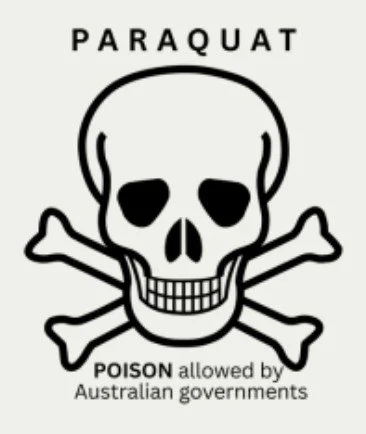
You may not be aware, but the APVMA approved the continued use of paraquat in Australia in mid-June (despite the chemical being banned in some 70 countries, including the EU and the UK, back in 2007). Somewhat ironically, this chemical was banned for domestic use in China in 2017 – yet China remains the largest producer of the chemical (for export markets!). There is clear evidence that there is a direct link between exposure to paraquat and Parkinson’s Disease. Paraquat (along with diquat and glyphosate) is used as a desiccant on many crops (sometimes only 2-7 days prior to harvest), so to avoid exposure to this chemical, it is recommended that you avoid non-organic: chickpeas, rice, potatoes, onions, lentils, soybeans, faba beans, cowpea, mung beans, and adzuki beans. More details at: https://organicinvestmentcooperative.com.au/food-as-thy-medicine-or-poison/