Food fraud
The results of the recent 4-Corners investigation by the ABC into food fraud is not surprising. We used to think that what was written on the label was a reasonable indication of what was in the bottle and also the country of origin – but clearly this is not the case. Unfortunately, where there’s a quick dollar to be made, some people are happy to break all the rules. And, globally, olive oil is one of the top foods and ingredients for fraud (along with fish, milk and honey)
We know audits conducted by the Australian Olive Association have found that imported olive oil, in particular, may not be true to label. Some were not extra virgin (some were even labelled as organic), and some may not have been pure olive oil (substitution has been a widespread problem in Europe over the last few years - and maybe not just Europe: as a result of some recent poor seasons in Australia, some local participants were selling imported olive oil under their own label. And at least one larger Australian certified organic brand was selling certified organic olive oil – that wasn’t!
So the supermarket item might be cheaper, but do you really know what you are getting? Is it really Australian? Is it extra virgin? Is it really certified organic? What is actually in that bottle? The reality is that you have no idea unless you are prepared to spend $ 1000s in testing, and even then you will only get part of the story.
So how can you be guaranteed that you're getting the real deal? Knowing your farmer and buying from them directly is a great option. The shorter the supply chain the less opportunity there is for substitution/adulteration/dilution/counterfeiting/mislabeling. Buying whole foods also limits the opportunity for food fraud; however, not all foods can be purchased in their original state (eg olive oil). Local co-ops and small independent grocery stores may also be a good alternative. In some cases, they have done the due diligence and are sourcing from reputable, local suppliers – if in doubt, ask them.
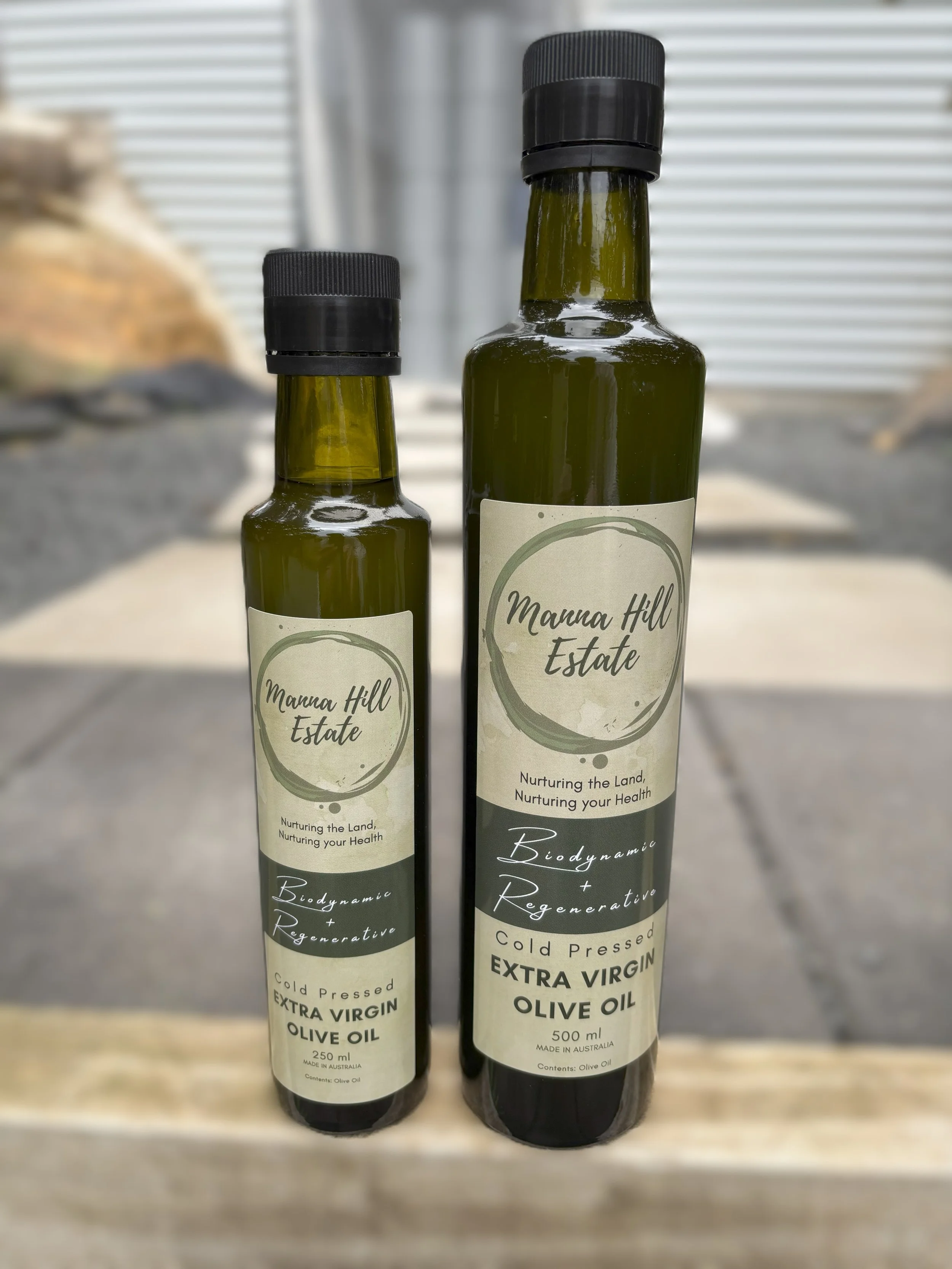
With Manna Hill Estate olive oil, you know you are getting the real deal. When we stock out – we stock out - sometimes halfway through the season, as we have done for the last 2 years! Not ideal from a continuity-of-supply point of view, but we can only sell what we produce. And our biodynamic/organic audit confirms this – the auditor does a mass balance to ensure that our sales don’t exceed our production!
Buying food is a political act – every purchase makes a difference; you just need to decide what sort of difference you want to make. By supporting your local farmer, you are supporting local production, the local community and hopefully, the sort of farming that makes the world a better place – fewer food miles and farming values that you are happy to support. Buying from the big chains, it would seem, is a lottery – you don’t know how the food was produced, with what chemicals and/or forced labour and whether the farming techniques are simply mining the soil, contaminating the air and water and leaving a barren wasteland for the future. What system do you want to support?